Chameleónovité: A Complete Informational Guide to Chameleon Biology and Behavior
Introduction
The animal family known as chameleónovité is one of the most fascinating groups of reptiles in the natural world. These reptiles are famous for their color-changing abilities, unique body structure, and highly specialized hunting techniques. Found mainly in warm regions, chameleónovité have adapted over millions of years to survive in diverse environments. This article provides a complete and well-structured overview of chameleónovité, explaining their biology, behavior, habitat, and importance in nature.
Understanding the Chameleónovité Family
Chameleónovité is the scientific family name used for chameleons. This family belongs to the reptile class and includes a large number of species with different sizes, shapes, and colors. Most members of the chameleónovité family are tree-dwelling reptiles, although a few species live closer to the ground.
What separates chameleónovité from other lizards is their extreme level of specialization. Their bodies are not designed for speed but for control, balance, and precision. These adaptations allow them to survive quietly in complex environments such as forests, shrubs, and rocky landscapes.
Physical Structure and Unique Body Features
One of the most noticeable characteristics of chameleónovité is their unusual body structure. Their bodies are laterally flattened, which helps them move easily between branches and leaves. Their tails are long and flexible, allowing them to wrap around branches for support.
Specialized Feet and Tail
Chameleónovité have specially adapted feet with toes grouped into two opposing sections. This structure allows them to grip branches tightly, similar to how a hand grasps an object. Their prehensile tail works as an additional support limb, helping maintain balance while climbing.
Independently Moving Eyes
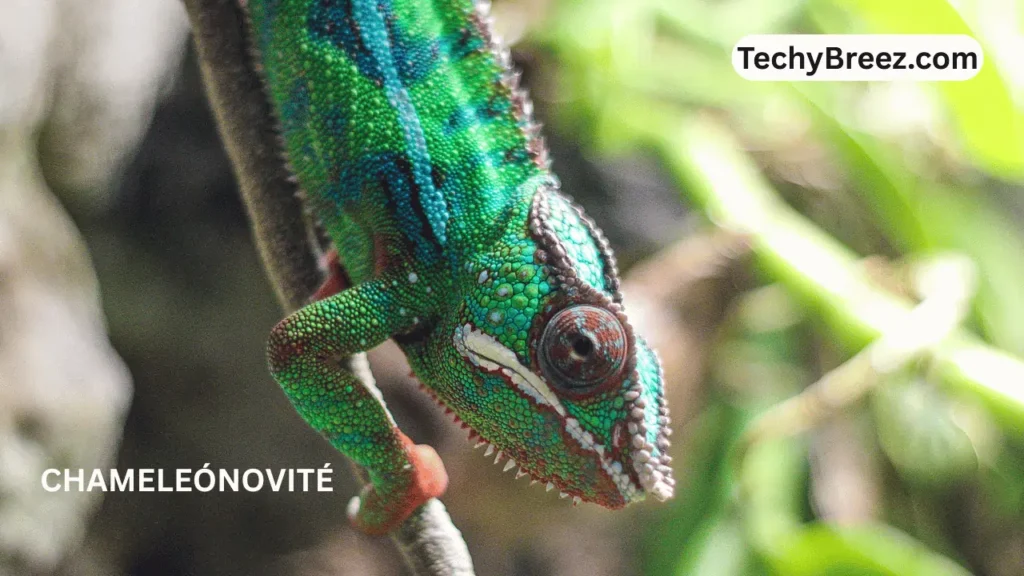
Another defining feature of chameleónovité is their eye movement. Each eye can move independently, allowing them to observe two different directions at the same time. This gives them nearly complete awareness of their surroundings and helps them detect predators and prey without moving their body.
How and Why Chameleónovité Change Color
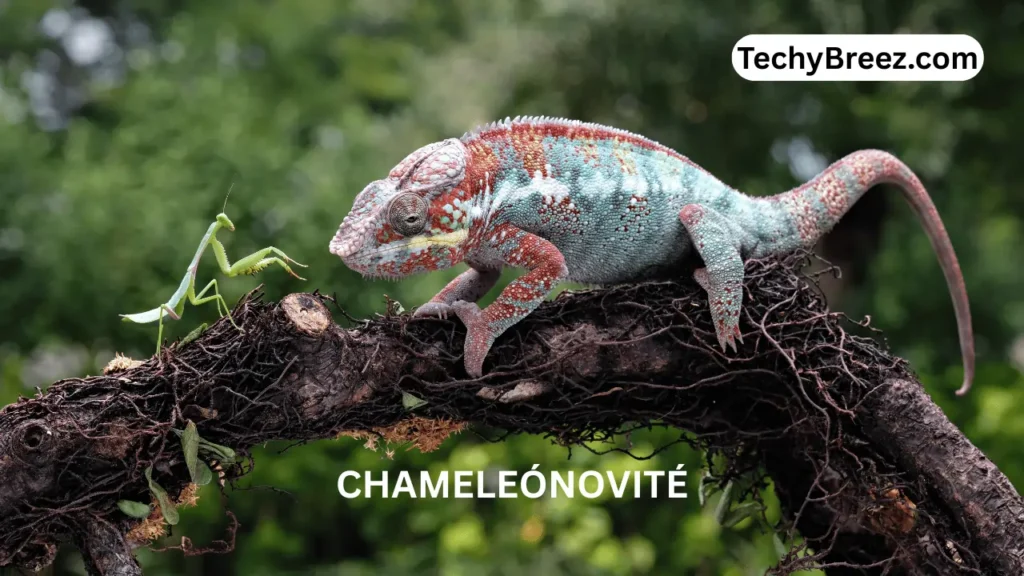
Color change is the most famous trait of chameleónovité, but it is often misunderstood. These reptiles do not change color simply to match their background. Instead, color change is a form of communication and regulation.
Chameleónovité change color to express mood, show dominance, attract mates, or regulate body temperature. Darker colors help absorb heat, while lighter colors reflect sunlight. Bright colors are often displayed during social interactions such as mating or territorial disputes.
This ability comes from specialized skin layers that reflect light differently depending on how they are adjusted by the chameleon’s body.
Feeding Habits and Hunting Method
Chameleónovité are primarily insect eaters. Their diet mainly consists of insects such as crickets, beetles, and flies. Larger species may also consume small reptiles or birds.
The Projectile Tongue Mechanism
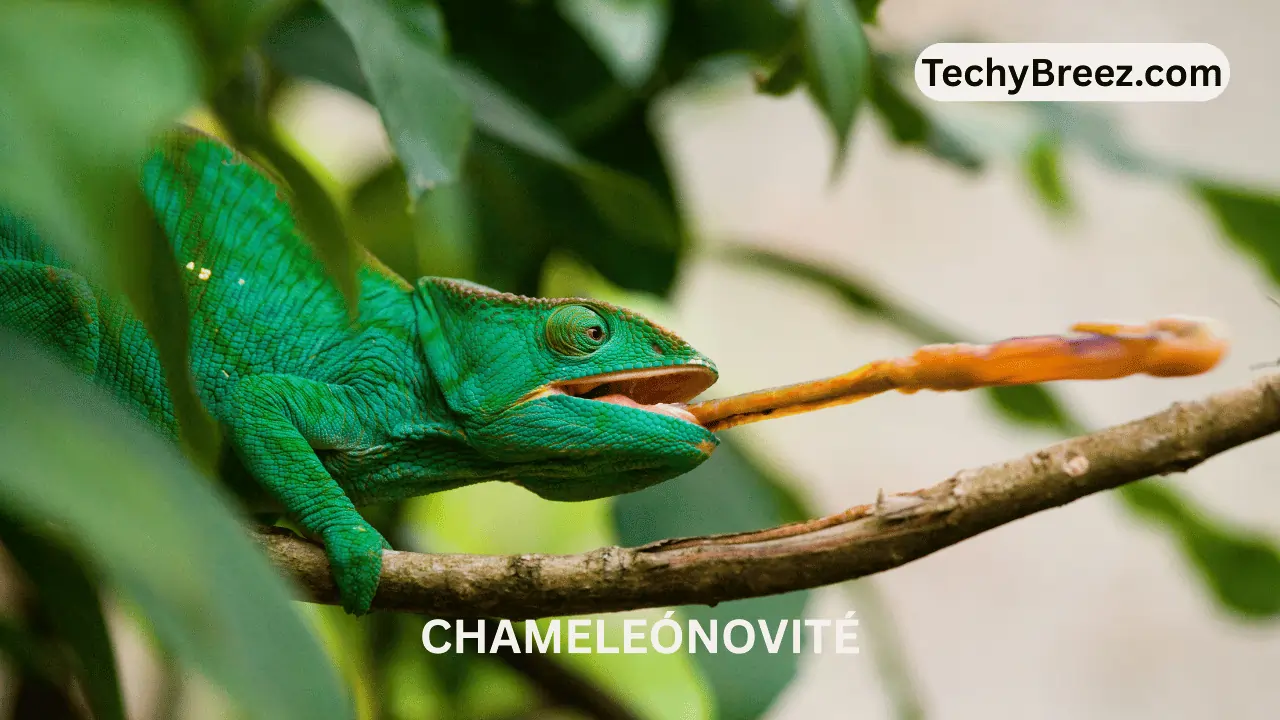
One of the most advanced hunting tools in the reptile world is the chameleon’s tongue. The tongue of chameleónovité can extend farther than the length of their body in a fraction of a second. The tip of the tongue is sticky and grips prey instantly.
This hunting method allows chameleónovité to catch food with great accuracy while remaining still, reducing the chance of being noticed by predators.
Natural Habitat and Geographic Distribution
Most chameleónovité species are found in Africa, with a very large number living in Madagascar. They are also found in parts of southern Europe, the Middle East, and Asia.
Their habitats include rainforests, dry forests, savannas, mountains, and semi-desert regions. Each species has adapted to the climate and vegetation of its environment. Tree-dwelling species rely heavily on branches and leaves, while ground-dwelling species use camouflage and slow movement for protection.
Reproduction and Life Cycle
Reproduction among chameleónovité varies by species. Most species lay eggs, which are buried in soil or sand. The eggs are left to develop without parental care, and the incubation period can last several months.
Some species give birth to live young, which is an adaptation to cooler environments. Newborn chameleons are fully independent and must begin hunting and avoiding predators immediately after birth.
Evolutionary Adaptations and Survival Skills
Chameleónovité are a strong example of how evolution rewards specialization. Their slow movement, advanced vision, and precision hunting reduce the need for speed or strength.
Over time, these reptiles developed traits that allow them to survive quietly and efficiently. Their ability to blend visually, communicate through color, and remain still for long periods has made chameleónovité successful in environments where other reptiles struggle.
Conservation Status and Environmental Threats
Many chameleónovité species face serious threats due to habitat destruction. Deforestation, climate change, and land development reduce the natural areas these reptiles depend on.
Illegal wildlife trade has also affected certain species. Because chameleónovité are sensitive to environmental changes, they are often among the first animals to decline when ecosystems are damaged. Conservation efforts focused on habitat protection are essential for their survival.
Ecological Importance of Chameleónovité
Chameleónovité play an important role in maintaining ecological balance. By controlling insect populations, they help prevent overpopulation of pests. Their presence also indicates a healthy environment, as they require stable conditions to survive.
Studying chameleónovité helps scientists understand adaptation, evolution, and biodiversity, making them valuable far beyond their visual appeal.
Frequently Asked Questions (FAQs)
1. What does chameleónovité mean?
Chameleónovité is the scientific family name that includes all chameleon species.
2. Do chameleónovité change color only for camouflage?
No, color change is mainly used for communication, temperature control, and emotional expression.
3. Where are most chameleónovité found?
Most species are native to Africa, especially Madagascar, with others found in Asia and Europe.
4. What do chameleónovité eat?
They primarily eat insects, although larger species may eat small animals.
5. Are chameleónovité endangered?
Some species are threatened due to habitat loss and illegal trade, making conservation important.
You May Also Read: https://digitalpure.co.uk/chameleonovite/